Comprehensive Website Audit

Website Audit Report
Schulz Bauelemente

schulz-bauelemente.de
April 2026
Prepared by NorthEra

Three audits. One conclusion.

Performance
48
Critical
Design Quality
42
Critical
AI Visibility
32
Critical
Overall
40
Critical
The Bottom Line

Schulz Bauelemente has over 25 years of experience, premium brand partnerships with Schüco, ROMA, and Inotherm, and a 400m² showroom in Lage. But the website representing all of this scores 40 out of 100 across performance, design, and AI visibility — well below what any serious building elements company should have. The first thing every visitor sees is a cookie consent modal, not the brand. The site takes nearly half a minute to fully load. And when someone asks an AI assistant about window or door specialists in the Lage/Bielefeld region, Schulz Bauelemente is virtually invisible. The website is actively undermining a business that has spent 25 years building its reputation.

The full picture, at a glance

48 /100
Performance
87 /100
Accessibility
61 /100
Best Practices
100 /100
SEO
42 /100
Design
32 /100
AI Visibility
Building & Construction Benchmark
● You: 40   ● Leaders: 75+

The first 30 seconds

A homeowner in Bielefeld is looking for new windows. They've heard about Schulz Bauelemente from a neighbour. They tap the link on their phone.

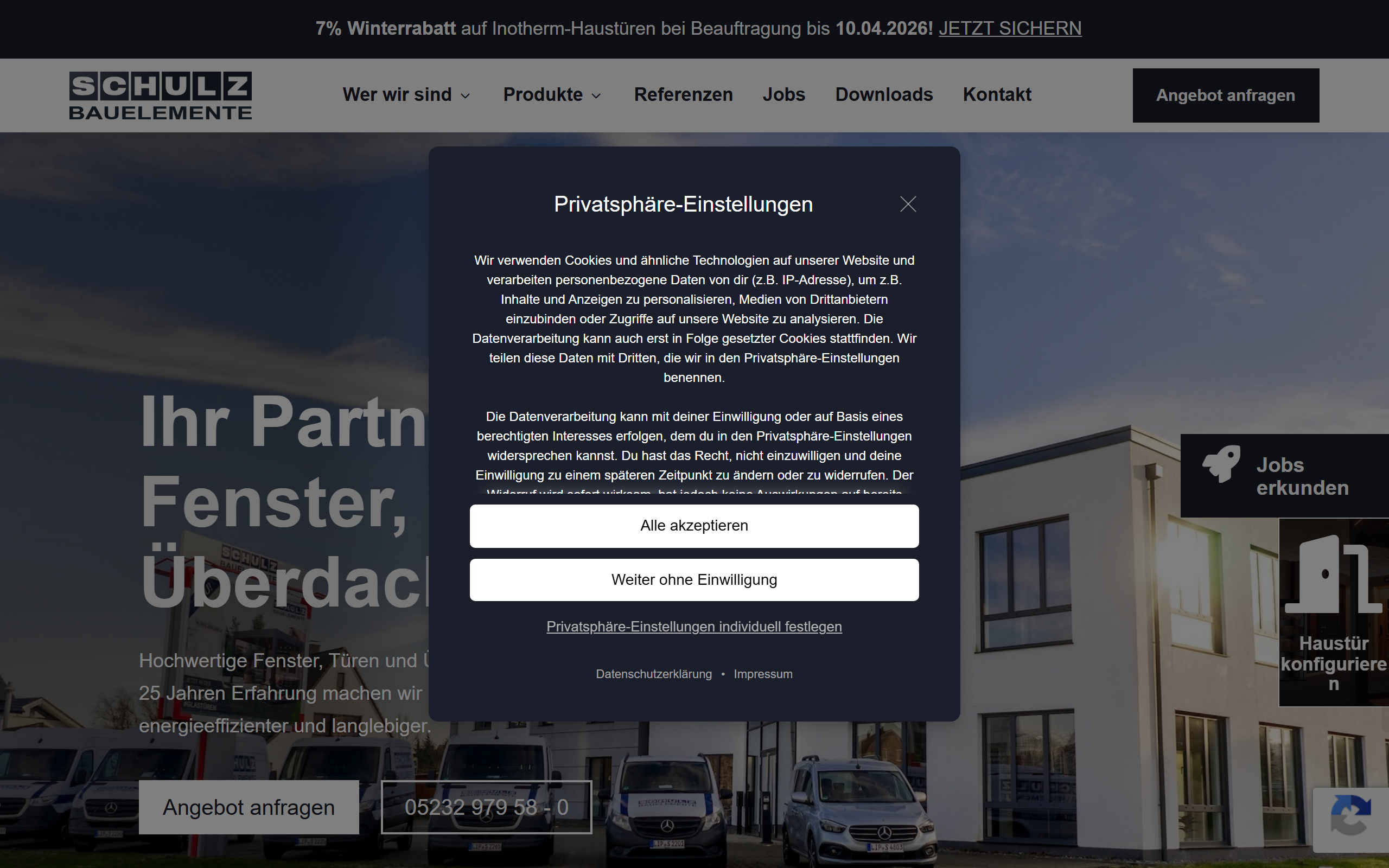
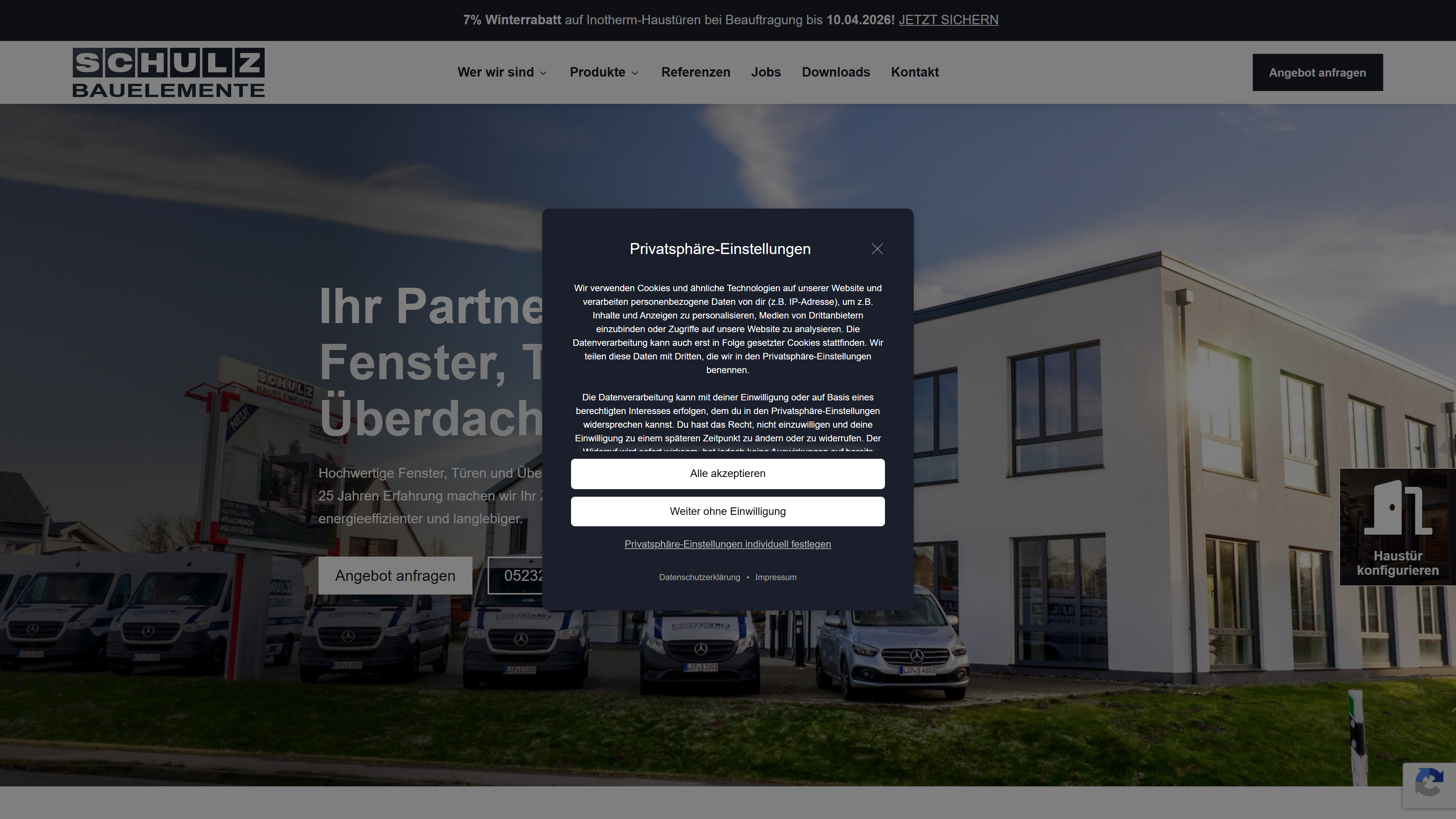
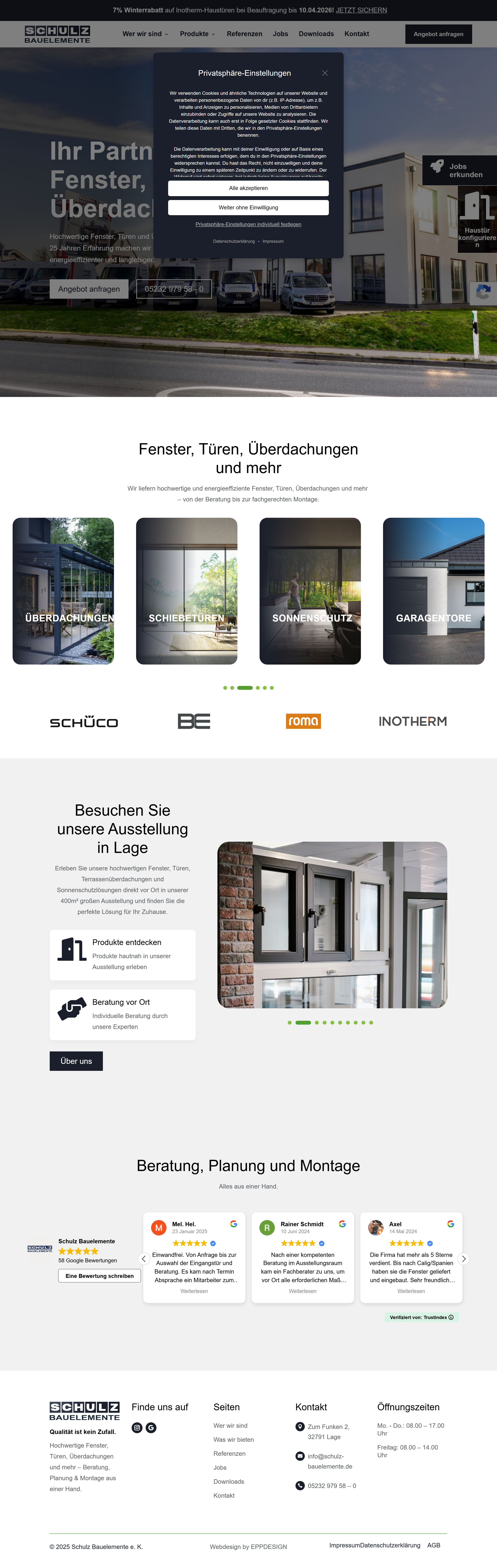
The first thing they see is not your brand, not your showroom, not your 25 years of experience. They see a cookie consent modal that covers the entire screen. Before any decision about windows or doors, the visitor must navigate a privacy dialog.

12 seconds pass. The first content begins to appear behind the modal. That's 12.2 seconds of First Contentful Paint — nearly 5 times slower than Google's recommended threshold.

27 seconds later, the hero section finally renders fully — 27.4 seconds for the Largest Contentful Paint, 11 times over Google's 2.5-second threshold. Google's own data shows 53% of mobile visitors abandon sites that take longer than 3 seconds to load.

By the time your page is fully interactive — 43.4 seconds later — the homeowner has long since moved on to a competitor.

Largest Contentful Paint Breakdown — 27.4 seconds total
Load Delay — 86%
TTFB 1.1s (4%)
Load Delay 23.6s (86%)
Load Time 2.2s (8%)
Render Delay 0.5s (2%)
10.4 MB
Total page weight (recommended: < 3 MB)
3
Render-blocking resources (8.4s wasted)
1.6 MB
Unused CSS loaded on every page

A 25-year-old company with a template website

You install premium Schüco window systems, Inotherm front doors, and Hörmann garage doors. Your website scores 42/100 on design quality — below most free WordPress themes. Here's how that breaks down across 10 categories of visual design:

Color System & Palette
5/10
Navigation & IA
5/10
CTA & Conversion Design
5/10
Imagery & Visual Assets
5/10
First Impression & Hero
4/10
Visual Hierarchy & Layout
4/10
Typography System
4/10
Spacing & Whitespace
4/10
Responsive Design
3/10
Craft & Polish
3/10
The Perception Gap

Schulz Bauelemente installs premium products from world-class manufacturers — Schüco, ROMA, Inotherm, Hörmann. These brands invest millions in their own design identity. But the website that represents Schulz uses default Divi Builder settings with no custom design decisions. The hero image shows company vehicles and a warehouse building — not the craftsmanship, not the finished work, not the quality. A homeowner comparing window companies online will subconsciously associate this site with budget-tier work — even though the products and service are premium.

What this is costing you

Every issue identified in this audit has a business consequence. Here's what these scores actually mean for Schulz Bauelemente:

27.4-second load time on mobile
Google penalizes sites that load slower than 2.5 seconds in search rankings. Your site is 11x over that threshold. Every second of delay reduces conversions by an estimated 7%. At 27 seconds, the vast majority of potential customers have already left before seeing your products or your quote form.
10.4 MB page weight — 1.6 MB of unused CSS alone
Your homepage downloads over 10 megabytes of data. A single CSS file alone is 1.6 MB — and 98% of that code is never used on this page. Meanwhile, a 2 MB image of a trade show booth loads before any product images. On a typical German mobile connection, visitors may wait 20+ seconds before they see anything meaningful.
Cookie modal blocks the entire first impression
Every single visitor — whether from Google, a recommendation, or an ad — sees a full-screen privacy dialog before they see your brand. The cookie consent modal covers your hero section, your value proposition, your "Angebot anfragen" button. Your brand has exactly zero seconds to make a first impression before a legal dialog demands attention.
Default Divi template — no design decisions made
Your site uses the Divi page builder with default settings: default typography, default shadows, default spacing, default border-radius. The hero shows company vehicles and a warehouse, not craftsmanship or finished projects. For customers choosing between window companies, the website communicates "small local operation" rather than "premium installation partner for Schüco and Inotherm."
Too many competing CTAs — no clear next step
Your hero section has two bottom CTAs, two floating sidebar buttons (Jobs, Haustür konfigurieren), a nav CTA, and a phone number. That's 6 competing actions before a visitor can even scroll. When everything shouts for attention, nothing gets it. Interested homeowners don't know where to click first, so many don't click at all.
Broken responsive experience — mobile is an afterthought
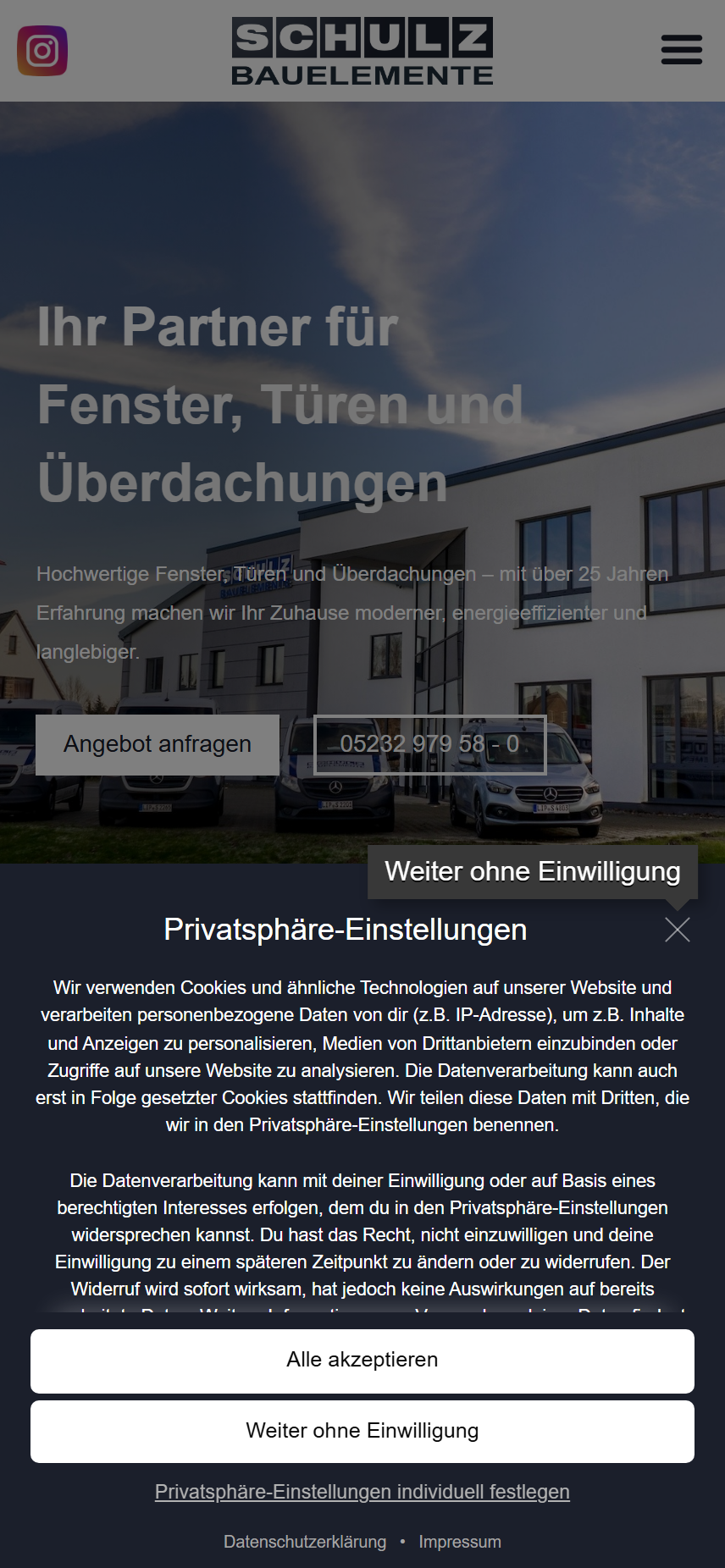
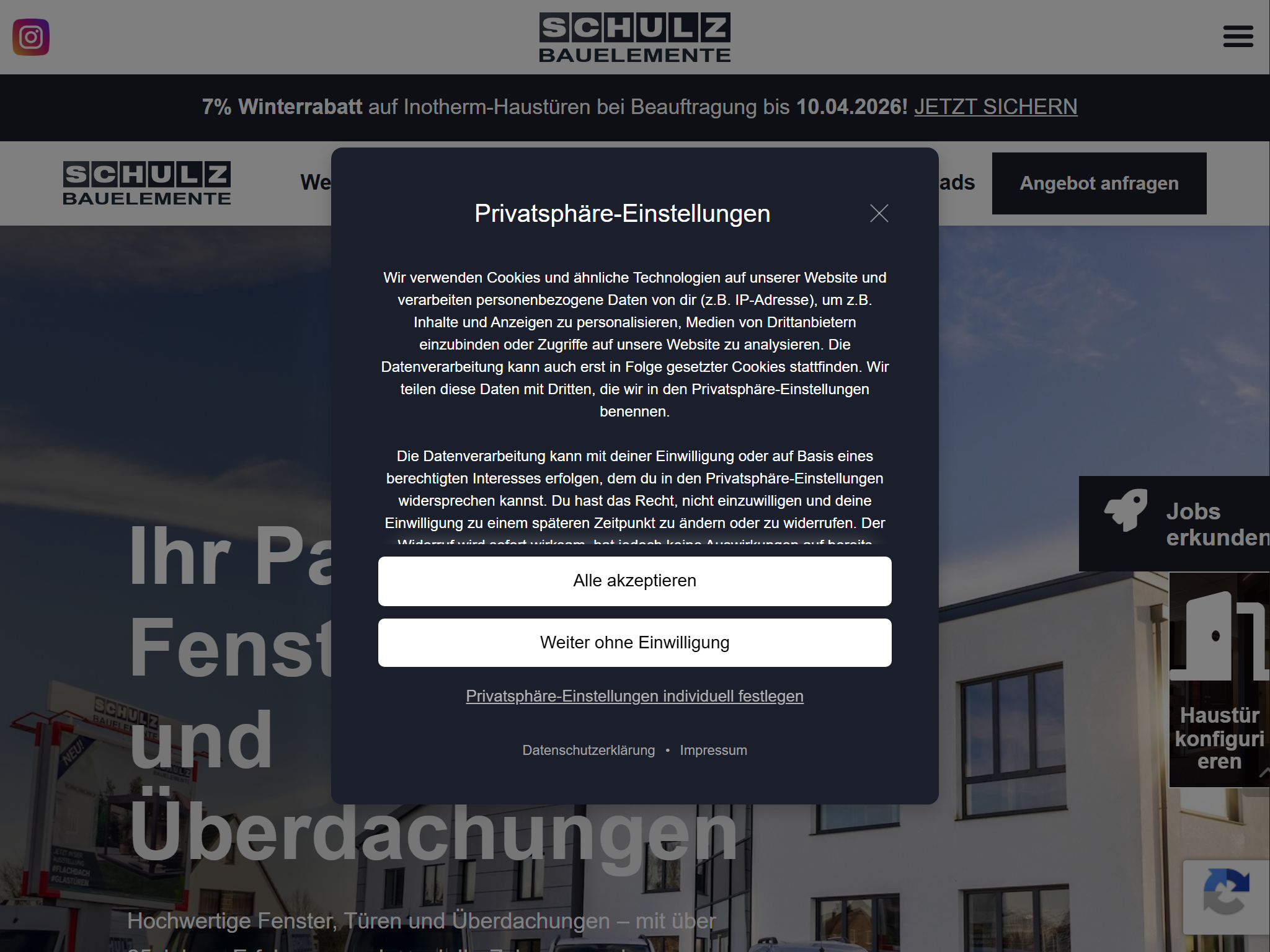
On tablet, floating sidebar CTAs overlap the hero content. At 1024px, a double logo appears (banner logo + nav logo stacking). Mobile is simply a collapsed desktop layout, not a designed experience. Over 60% of construction and home improvement searches happen on mobile — and your site treats mobile visitors as an afterthought.
🌐
AI assistants can't find or recommend you
When a homeowner in Lage or Bielefeld asks ChatGPT, Perplexity, or Google's AI "Welche Firma für Fenster und Türen in Lage?" — Schulz Bauelemente won't be cited. Your GEO score of 32/100 means your content is essentially invisible to AI systems. No discovery protocol, no structured business data, no quotable content for AI to reference.
🌐
Missing LocalBusiness schema — Google doesn't know what you are
Despite being a local service business, your site has no LocalBusiness schema. Google's AI Overviews, Maps rich results, and AI assistants can't parse your business hours, service area, or product categories as structured data. Competitors with proper local schema appear in rich results — you appear as a plain blue link.
🌐
No quotable content for AI to cite
Your product pages average 400-500 words of generic descriptions. No technical specifications, no buying guides, no FAQ sections, no expert content. When AI systems look for authoritative answers about "Vorteile von Aluminium-Fenstern" or "Schüco vs. Kunststoff," there's nothing on your site worth citing. Your 25 years of expertise exist only in your team's heads — not on your website.

Where you are vs. where you should be

Today
48 /100
Performance
42 /100
Design
32 /100
AI Visibility
After NorthEra
100 /100
Performance
90+ /100
Design
90+ /100
AI Visibility
The Opportunity

The gap between 40 and 93+ isn't cosmetic. It represents the difference between a website that loses visitors before they even see your products, and one that converts interest into quote requests. Performance at 100 means your site loads instantly on any device — even on a construction site with weak mobile signal. Design at 90+ means every pixel communicates the quality and craftsmanship Schulz Bauelemente stands for. AI Visibility at 90+ means when someone asks an AI assistant about window companies in the Lage/Bielefeld region, your name comes up. Your expertise, your partner relationships, your 25-year track record — all of it is already there. It's the website around it that's holding everything back.

How AI systems see your brand

AI-powered search (ChatGPT, Perplexity, Google AI Overviews, Gemini) is rapidly changing how homeowners find local service providers. When someone asks "Welcher Fensterbauer in Lage ist empfehlenswert?" — AI needs structured, quotable content to cite you. Here's how your site performs:

Technical GEO
50
Schema & Structured Data
35
Content E-E-A-T
35
Brand Authority
30
AI Citability
25
Platform Optimization
20
Google AIO
30
No local schema
ChatGPT
25
No llms.txt, thin content
Perplexity
25
Nothing to cite
Gemini
20
No Knowledge Graph
Bing Copilot
30
Crawlable, no depth
The Core Problem

Schulz Bauelemente has 25 years of experience installing premium building systems — but almost none of that knowledge exists on the website. Product pages average 400-500 words of generic descriptions. There are no expert guides ("How to choose the right window system"), no FAQ sections, no technical specifications, no case studies with project details. The References page is an image gallery with zero text. AI systems need quotable, structured, expert content to cite a business — and your site simply doesn't have it.

Recent results from a NorthEra engagement

Same methodology. Same standards. Different client, similar category. Here's what happened.

Performance
100
Perfect Lighthouse — All Categories
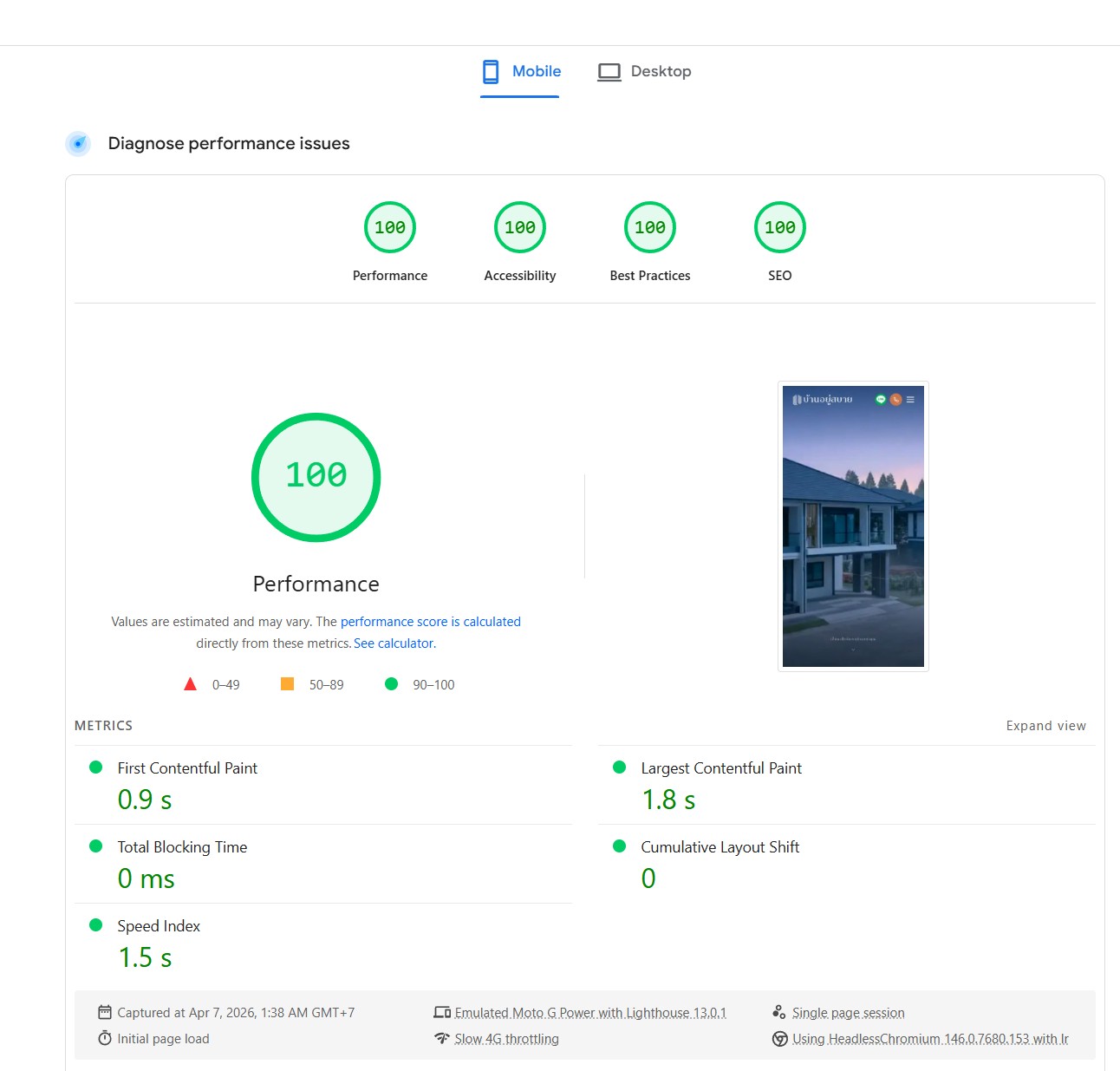
Lighthouse scores: 100 Performance, 100 Accessibility, 100 Best Practices, 100 SEO
All four Lighthouse categories at 100/100 on mobile with slow 4G throttling. FCP 0.9s. LCP 1.8s. Zero blocking time. Zero layout shift.
AI Visibility
15x
AI Citations — Overnight
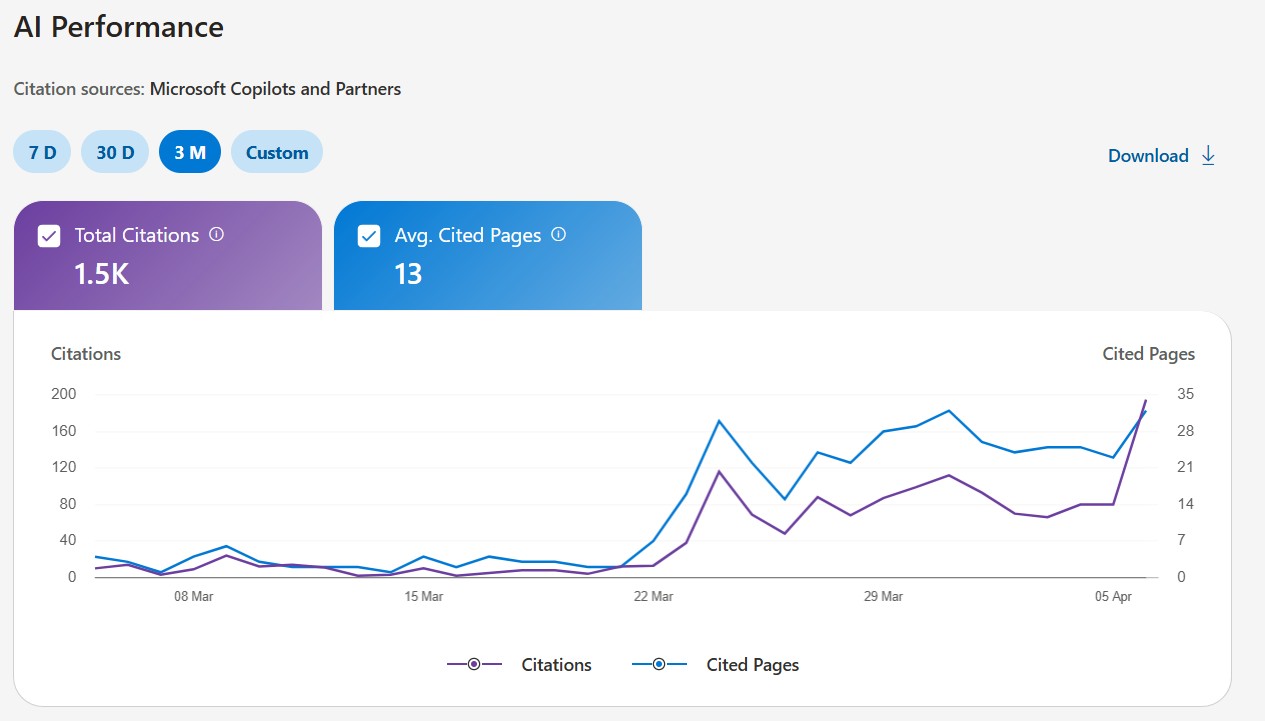
AI Performance: 1.5K total citations, 13 avg cited pages, exponential growth
Microsoft Copilot citations — from near-zero to 1,500+ total. 15x overnight spike when GEO optimizations went live. Growth still accelerating.
Search Traffic
3x
Impressions — Overnight
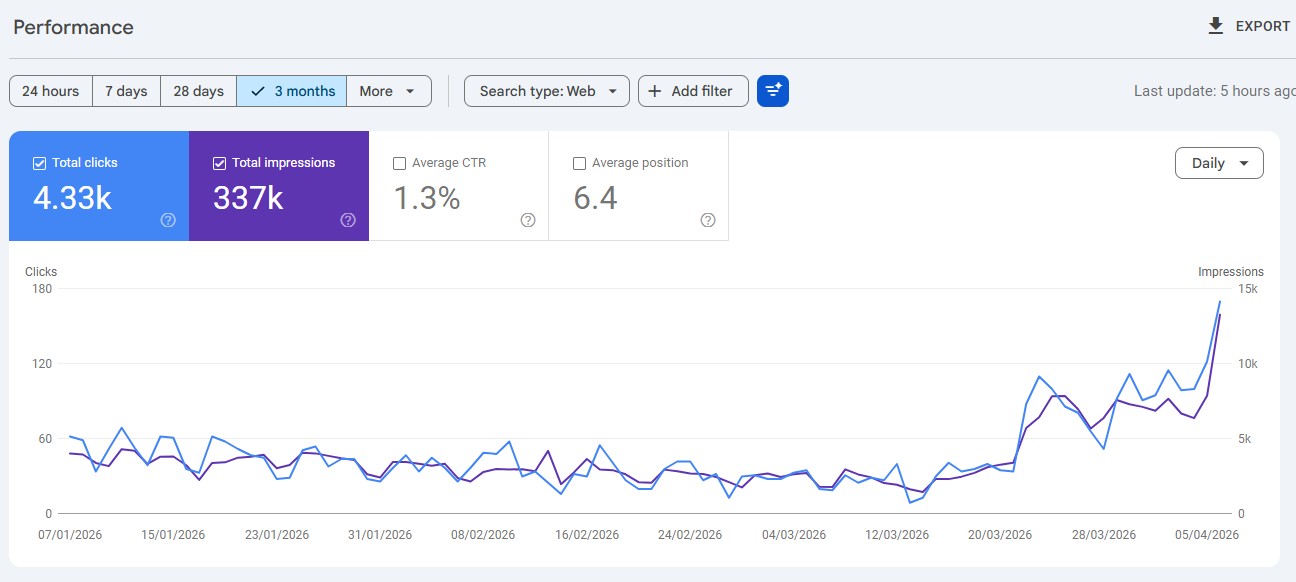
Google Search Console: 337K impressions, 4.33K clicks, hockey-stick growth
Google Search Console — 3K/day to 15K/day impressions overnight. 337K total impressions. 4.3K clicks. Average position 6.4. Hockey stick still climbing.
Same methodology. Same standards. Applied to your brand.
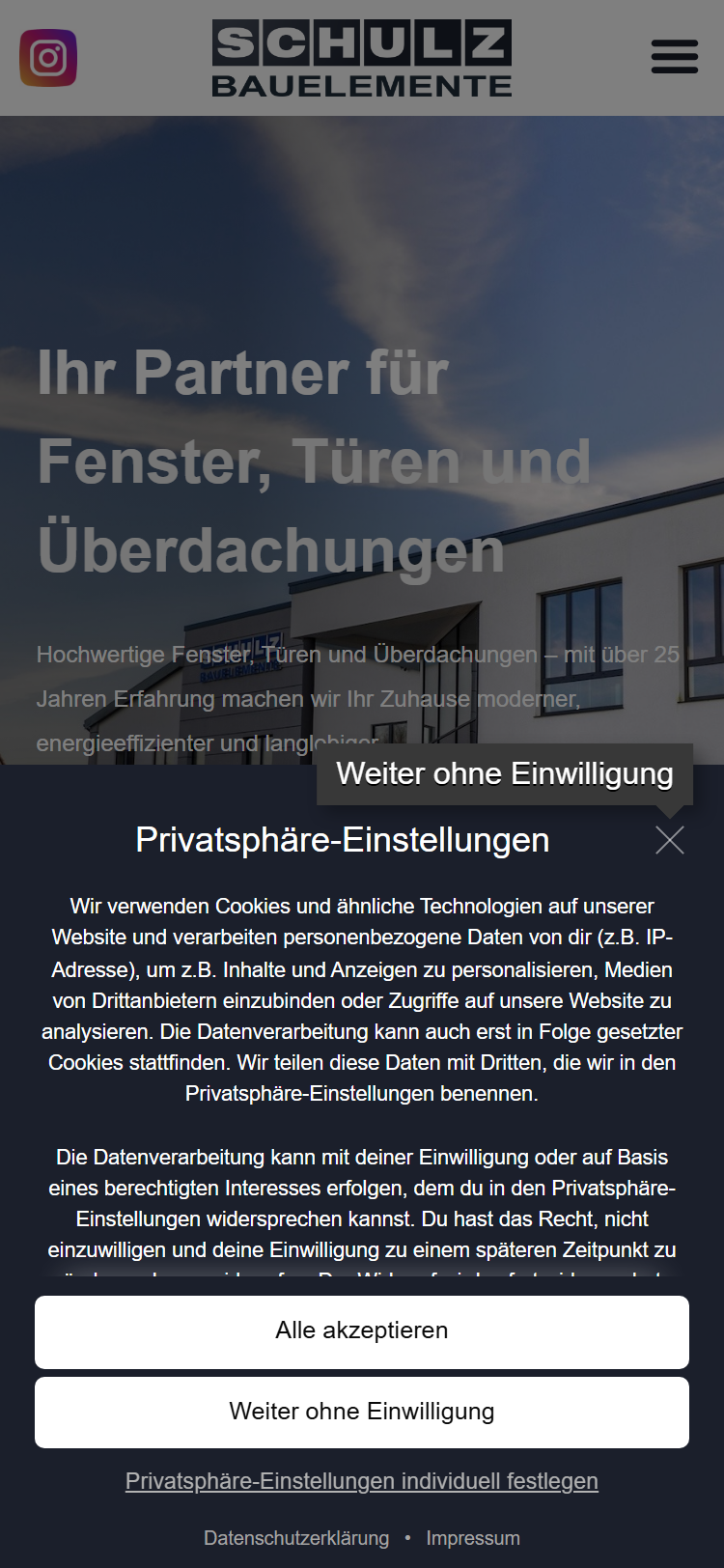
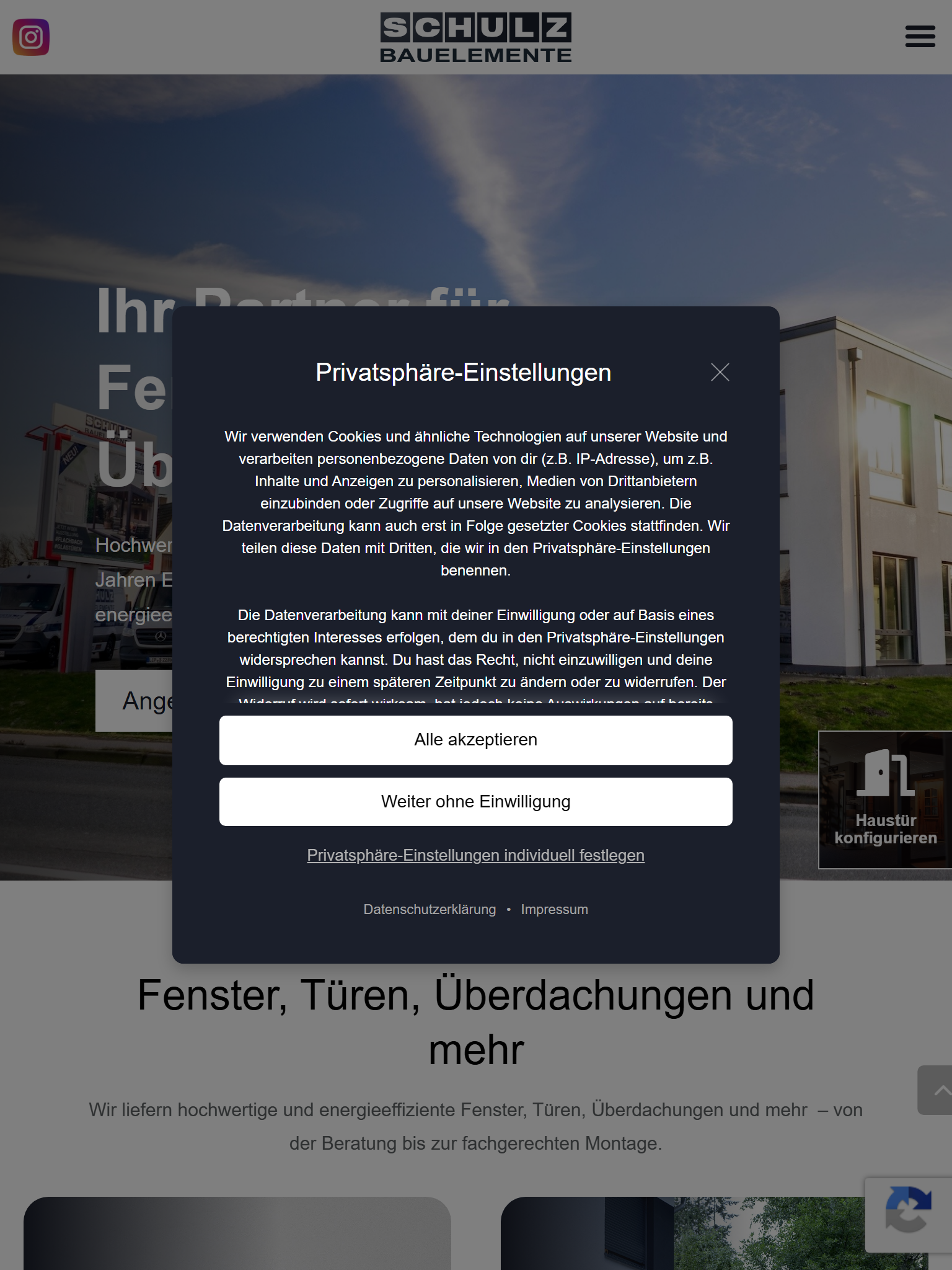
Your site across devices

Mobile S
Mobile — 375px
Tablet
Tablet — 768px
Desktop
Desktop — 1280px
Mobile L
Mobile L — 428px
Laptop
Laptop — 1024px
Desktop HD
Desktop HD — 1920px
Mobile full page
Mobile — Full Page
Tablet full page
Tablet — Full Page
Desktop full page
Desktop — Full Page

About this audit

This report was produced using three independent analysis methods: Google Lighthouse 12.8.2 for performance, accessibility, best practices, and technical SEO metrics (mobile emulation, throttled 4G); multi-breakpoint visual analysis across 6 device sizes (375px – 1920px) for design evaluation; and proprietary GEO scoring across 6 dimensions of AI visibility including citability, structured data, platform optimization, and content quality.

All scores are based on live data collected on 10 April 2026. Scores may vary with subsequent changes to the website. This report presents findings and analysis only — it does not constitute technical consulting or prescribe specific implementations.

Ready to discuss what these scores
mean for Schulz Bauelemente?

This report identifies what's holding your website back. The next step is a conversation about what moving forward looks like.

Schedule a Conversation